
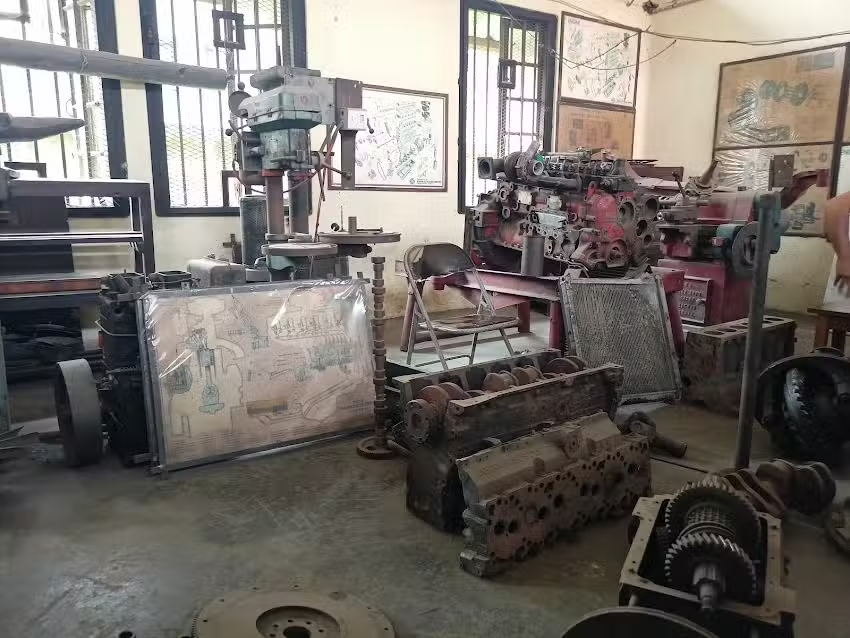
Workshop Of Assam State Transport Corporation
BackThe Workshop of Assam State Transport Corporation (ASTC) in Jorhat serves as the primary maintenance and repair depot for the region's public bus fleet. Positioned on Assam Trunk Road, it is a government establishment tasked with ensuring the operational readiness of vehicles that thousands of citizens rely on daily. However, a closer examination reveals a facility with a dual identity: it is both a valuable center for hands-on technical training and a subject of significant public criticism regarding its effectiveness and management. With a large volume of user feedback resulting in a mixed average rating, potential customers and stakeholders encounter a complex picture of its service reality.
A Hub for Technical Education and Repair
One of the most commendable aspects of the ASTC workshop is its role in vocational education. The facility offers industrial internships to engineering students, providing a crucial bridge between academic theory and practical application. Instructors at the workshop are regarded by some as highly experienced, guiding interns through the intricacies of heavy vehicle mechanics. Trainees get direct exposure to the core components of bus repair, including:
- Engine Repair: Detailed study of Internal Combustion (IC) engines, with a focus on Compression Ignition (diesel) engine functionality.
- Transmission Service: Practical knowledge of power transmission systems from the engine to the wheels.
- Valve mechanism and other critical components of vehicle diagnostics and repair.
This educational outreach provides a significant benefit to the community, nurturing the next generation of mechanics and engineers. For many students, this workshop is one of the few local places to gain hands-on experience with the kind of large-scale fleet maintenance challenges that public transport systems present.
Operational Deficiencies and Maintenance Concerns
Despite its educational value, the workshop faces substantial criticism regarding its primary function: keeping the bus fleet in good working order. Many user accounts paint a grim picture of the buses' condition, which they directly link to the workshop's perceived inefficacy. One of the most frequently cited problems is a chronic shortage of essential spare parts. Staff members have reportedly voiced their frustrations over the inability to procure necessary components, which severely hampers their ability to perform timely and effective auto repair. This scarcity can lead to prolonged downtimes for vehicles and contributes to the sight of numerous buses lying defunct in the yard.
This issue appears to be part of a larger, systemic problem within the ASTC. Reports from across Assam suggest that a significant number of buses—over 480 according to some government records—are non-operational. Despite a considerable annual budget allocated for repairs, the tangible results on the ground are questioned by the public. The visible decay of buses parked at the Jorhat workshop, seemingly abandoned to rust, is a powerful symbol of this disconnect and has led to accusations of mismanagement and inefficient use of public funds.
The State of the Facility
Feedback on the workshop's physical environment and amenities is deeply divided. Some visitors, particularly those who arrived due to an unexpected bus breakdown, have described the facility as relatively hygienic, with functioning toilets and helpful staff who were accommodating during a stressful situation. This suggests that, in moments of crisis, the workshop can provide a basic level of customer service and comfort.
However, this positive view is strongly contradicted by other, more critical assessments. Numerous reports describe the premises as poorly maintained, with a "dirty backyard" and a general state of disrepair. Some of the most severe reviews allege that the poor building quality is indicative of deeper issues, such as the misuse of government funds by contractors. Specific complaints have been raised about non-functional lights and water faucets in restrooms, pointing to a lack of routine preventive maintenance not just on vehicles, but on the facility itself. This inconsistency in user experience suggests that the quality of service and cleanliness can be unpredictable.
A Mixed Verdict on Staff and Service
The perception of the workshop's staff is as varied as the feedback on its facilities. On one hand, employees are praised as "kind and warming" by some customers who received assistance. The instructors involved in the internship program are also noted for their experience. On the other hand, some of the most scathing reviews label the staff as "bad workers" and unhelpful, contributing to an overall negative experience. This divergence in opinion may reflect a lack of standardized customer service protocols or could be indicative of morale issues, possibly linked to the challenging working conditions and lack of resources like auto parts.
Looking Ahead: The Road to Improvement
The Workshop of Assam State Transport Corporation in Jorhat is at a crossroads. It holds the vital responsibility of maintaining public transport infrastructure and possesses a unique strength as a training ground for aspiring engineers. Yet, it is evidently struggling with fundamental operational challenges that undermine public confidence and lead to a deteriorating fleet. The widespread issues of poor vehicle upkeep and facility neglect are not isolated to this location but reflect a broader problem within the state's transport corporation. To move forward, a concerted effort would be needed to address the supply chain for spare parts, implement a rigorous vehicle maintenance schedule, and invest in the upkeep of the workshop itself. For the citizens who depend on its services and the students who learn within its walls, the hope is for a future where the workshop can more effectively fulfill both of its critical missions.
