
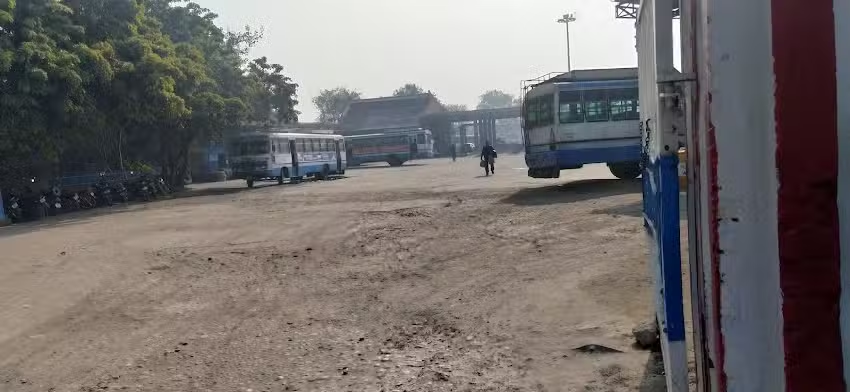
Haryana Roadways Workshop
BackThe Haryana Roadways Workshop in Sector 7, Ambala, serves as a critical node in the state's public transportation network. Unlike a typical commercial garage, this is a government-owned and operated facility with a singular, vital mission: the maintenance and repair of the Haryana Roadways bus fleet. This distinction is fundamental for any potential customer to understand; this workshop is not open to the public for private auto repair. Its operational status is 24 hours a day, seven days a week, a necessity dictated by the relentless schedule of public transit. The primary function of this establishment is to ensure that the buses connecting cities and villages are safe and operational, a task that involves a wide spectrum of mechanic services ranging from routine checks to complex overhauls.
Core Operations and Service Efficiency
As a dedicated center for fleet maintenance, the Ambala workshop is responsible for a comprehensive list of tasks. This includes preventative vehicle maintenance, crucial for minimizing breakdowns on the road, as well as reactive repairs. The scope of work covers everything from intricate engine repair and transmission work to essential safety systems like brake service. Every bus must undergo a thorough vehicle inspection before it is deemed roadworthy, making the workshop the gatekeeper of passenger safety. User feedback on the efficiency of these operations presents a mixed but insightful picture. One user commendably notes that the "service is fast, no doubt," which is a significant compliment for a high-volume, government-run workshop. This suggests that, at its best, the facility has streamlined processes and skilled technicians capable of turning around vehicles quickly to keep the transport system moving.
However, this efficiency is often hampered by systemic challenges that appear to be widespread across Haryana Roadways' maintenance division. News reports from late 2024 highlighted a critical issue plaguing the network: a severe shortage of skilled mechanics, with some depots facing staff deficits of up to 80%. Such understaffing can lead to significant delays, increase the workload on existing employees, and may result in a higher percentage of the fleet being out of service at any given time. While one customer experienced fast service, these broader issues suggest that such efficiency may not be consistently achievable, potentially leading to the service gaps, like the lack of late-night buses mentioned in another review, because there aren't enough operational vehicles to cover all routes.
Staff Performance and Customer Interaction
The human element of any service center is paramount, and at the Haryana Roadways Workshop, public perception of the staff is deeply divided. This reflects a common dichotomy found in many public sector undertakings. On one hand, a reviewer describes the staff's behavior as "exllent." This points to the presence of dedicated, professional, and courteous employees who take pride in their work and interact positively with drivers or any officials visiting the workshop. These are the individuals who form the backbone of the service, working diligently despite potential challenges.
Conversely, another user provides a starkly different account, stating, "Staff is not so good no one even came if we have any issue there." This negative experience, where an individual felt completely ignored, paints a picture of unresponsiveness and poor service. These conflicting accounts are not necessarily contradictory; rather, they likely reflect an inconsistent reality. The aforementioned staff shortages could be a major contributing factor. An overworked and under-resourced team may struggle to be attentive to every issue, leading to instances of perceived neglect. This inconsistency in service quality is a significant drawback, as it creates uncertainty for the bus drivers and operational managers who rely on the workshop's support.
Infrastructure and Facility Conditions
Perhaps one of the most consistent points of criticism relates to the physical state of the workshop. A user bluntly states that the "building condition not good. Need to repair." This observation is echoed by another long-term user who suggests that the "Government & the Roadways management should take more care for proper service." These comments point towards a significant issue of underinvestment in infrastructure. A deteriorating building not only creates a poor working environment for the mechanics but can also impact the quality and safety of the repair work itself. Proper bus repair requires a clean, well-lit, and properly equipped space.
This issue seems to be a systemic one. Reports have indicated that workshops often lack necessary spare parts and need significant upgrades to handle the newer, more technologically advanced buses being added to the fleet. The government itself has acknowledged these infrastructure deficits, with plans announced in early 2025 to modernize bus terminals and install new vehicle inspection and fitness-check facilities across the state. While these plans are promising for the future, the current reality for the Ambala workshop appears to be one of making do with aging facilities. This can demoralize staff and create a bottleneck in the entire public transport chain, where even the most skilled mechanic is limited by their environment and the tools at their disposal. The quality of a commercial vehicle service is as much about the facility as it is about the technicians.
A Balanced Assessment
In summary, the Haryana Roadways Workshop in Ambala is an essential institution grappling with significant challenges. Its identity as a government-run facility for fleet maintenance defines both its strengths and its weaknesses.
- Positives: The workshop's 24/7 availability is a major asset, ensuring the bus fleet has constant support. There are instances of fast, efficient service and reports of excellent, dedicated staff members who perform their duties well.
- Negatives: The most significant drawbacks are the poor condition of the building and facilities, which points to a lack of investment. This is compounded by reports of systemic staff shortages that likely contribute to the inconsistent service levels experienced by users. The conflicting reviews on staff helpfulness suggest a lack of a uniform service standard.
For the citizens who rely on Haryana Roadways, the performance of the Ambala workshop has a direct impact on their daily lives. While the facility is clearly operational and staffed by some capable individuals, it also appears to be symptomatic of a broader system in need of modernization, better funding, and strategic management to ensure it can reliably support the state's public transportation needs for years to come.
